
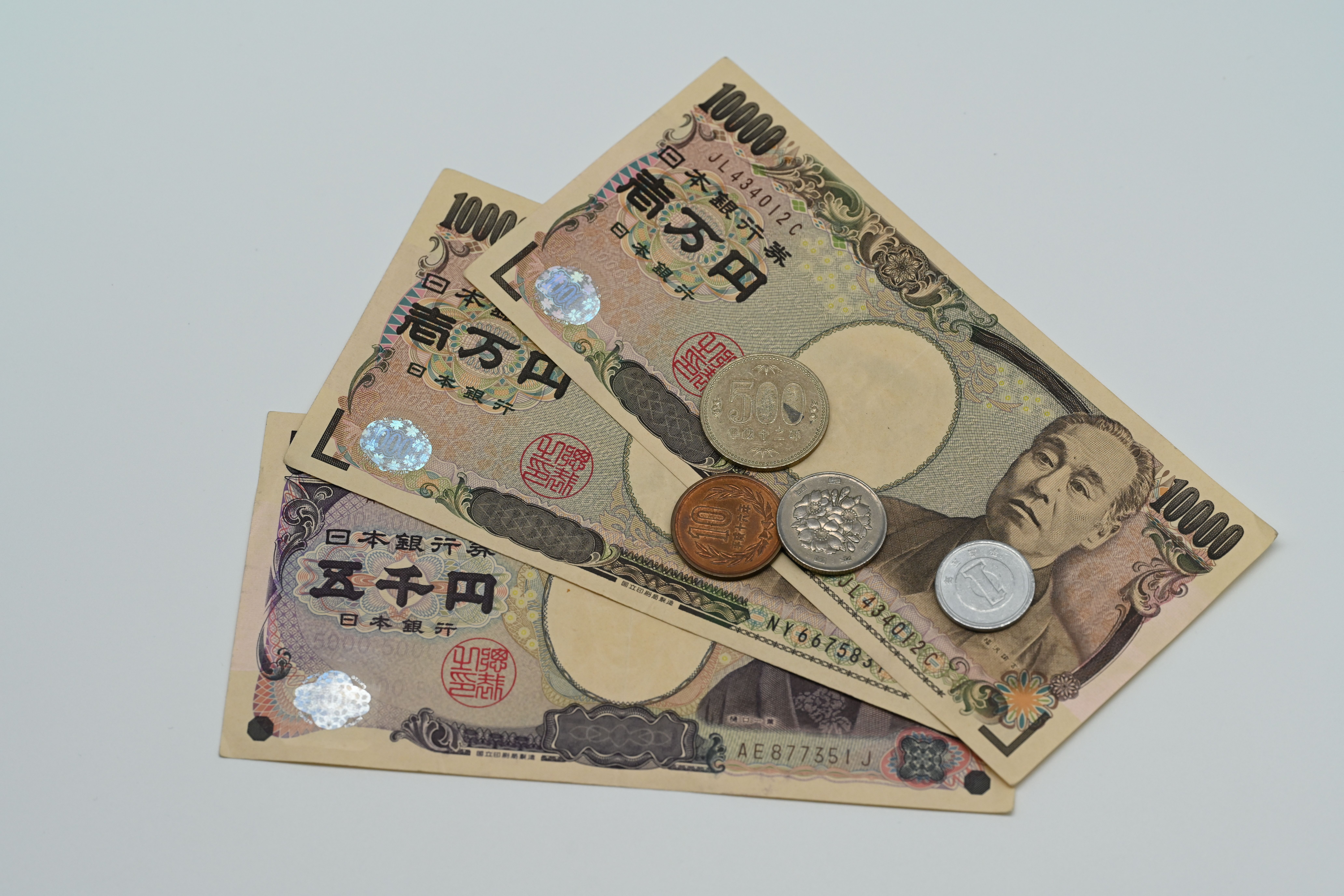
U.S. and Japanese monetary authorities have stepped in with coordinated intervention to put the brakes on yen weakness. Over the past 30 years, the U.S. has taken part in yen-related coordinated intervention only three times: 1998, 2011, and now. The 2011 episode, however, was aimed at curbing yen strength in the aftermath of the Great East Japan Earthquake — the opposite direction from today’s move. That makes this the first time since 1998 that U.S. and Japanese authorities have jointly acted against yen weakness.
What Happened
USD/JPY has pulled back into the high-157 range (yen strength) since the intervention, entering a calmer phase. KB Financial Group’s research institute noted that what matters more than the scale of the intervention is the U.S.’s policy commitment — with Treasury Secretary Scott Bessent leaving the door open to further coordinated action, markets are likely to stay alert to policy-driven yen strength for now.
Adding to the move, a wave of yen short-position unwinding has coincided with the intervention, and some analysts expect the yen to keep strengthening in the near term as a result.
The Won Is Moving Too — Yen-Won Co-movement
Yen moves tend to spill over into the won. In a log-regression analysis of the past five years of data, KB Financial Group’s research institute found that a 1% decline in USD/JPY (yen strengthening) corresponds, on average, to a 0.6% decline in USD/KRW (won strengthening).
That pattern showed up in Seoul’s FX market on the 4th. Easing Middle East risk combined with yen strength from the coordinated intervention pulled USD/KRW down toward the 1,430 level during the afternoon session. But settlement-related dollar demand tied to foreign investors’ profit-taking stock sales, along with bargain-buying from importers, supported the downside — Seoul trading closed at 1,429.8, up ₩5.8 from the previous day. In the overnight session, the pair tracked yen strength even as the dollar index rebounded, closing 6.0 won lower than the prior day’s 6 p.m. reference at 1,429.5.
The Underlying Weakness Driver Hasn’t Gone Away
Some in the market caution against calling this a full trend reversal just yet. The fundamental driver of yen weakness — the U.S.-Japan interest rate gap — remains fully in place. The prevailing view is that this is a near-term bounce driven by the combination of coordinated intervention and short-covering, rather than a structural shift.
The key question is whether the further intervention Bessent has signaled actually materializes. If it does, market participants broadly expect the floor for USD/KRW to move lower as well.
Strategist View
The chart makes the scale of this intervention clear. USD/JPY peaked at 163.988 on July 23 — the point of maximum yen weakness — before plunging more than 8 points to a low of 155.222 by August 3. Along the way, price found support near the 250-day moving average and has since rebounded technically, working its way back into the high-157 range.
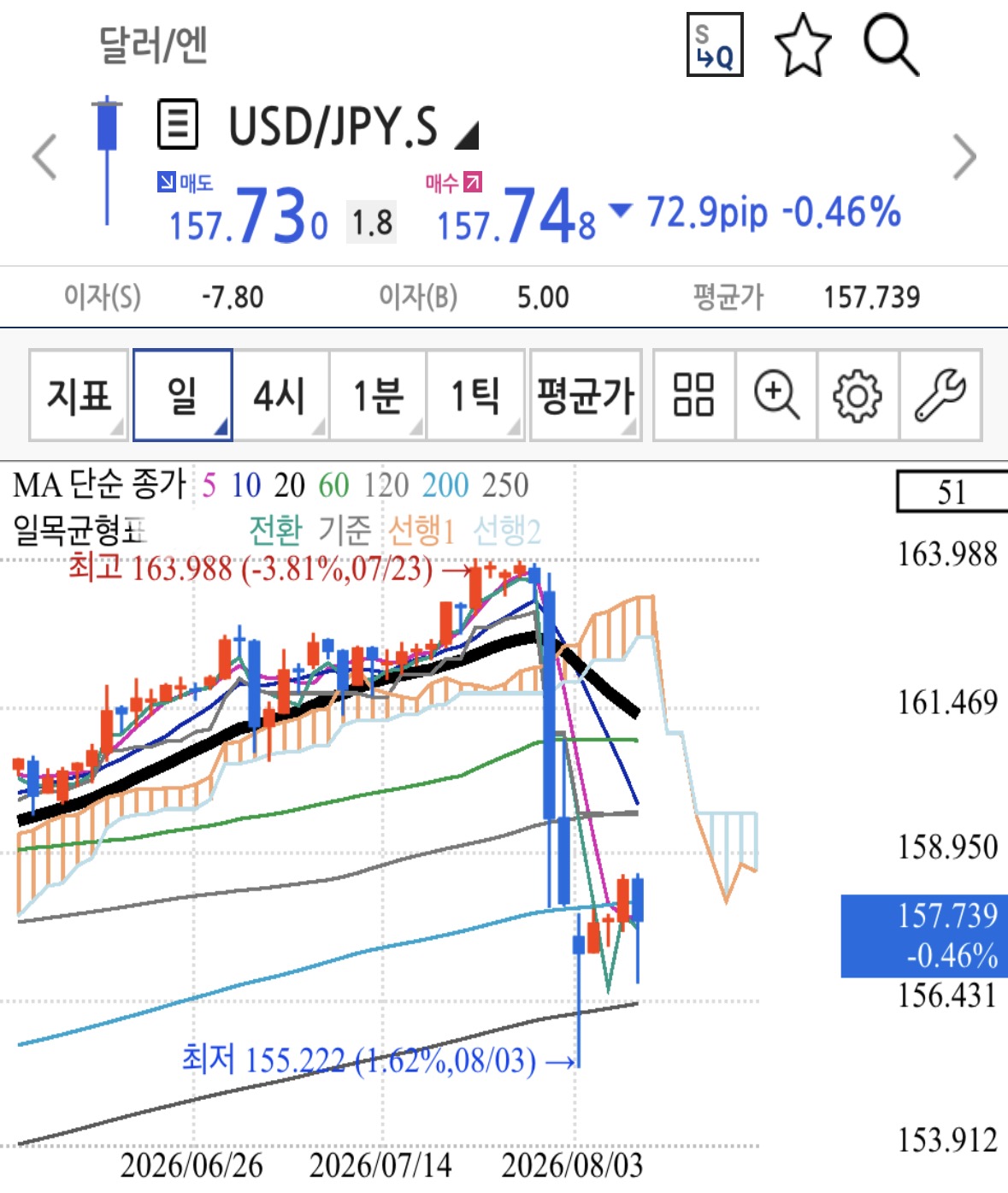
Markets appear to read this less as a structural shift toward a stronger yen and more as a temporary, short-term bout of dollar-selling triggered by the policy variable of coordinated intervention. The fact that price bounced relatively quickly after confirming support at the 250-day line dovetails with the earlier point that the fundamental driver of yen weakness — the U.S.-Japan rate gap — hasn’t gone anywhere.

newsroom
FX