
Oil prices jumped sharply as tension around the Strait of Hormuz flared up again. On the ICE Futures exchange in London on the 6th (local time), October-delivery Brent crude settled up 3.8% (up $3.04) at $82.49 a barrel. On the New York Mercantile Exchange, September WTI futures rose 2.8% to close at $77.29 a barrel.
This is the same risk that sat behind the KOSPI’s sharp swings on August 7, which we covered at the time. If Korea’s equity market priced in this risk a day early, the oil market appears to be where it landed in full on this day.
What Happened
According to Iran’s semi-official Fars news agency, the national security committee of Iran’s parliament is reviewing legislation that would bar vessels belonging to the U.S., Israel, and countries Iran designates as hostile from passing through the Strait of Hormuz. The bill reportedly includes fines of up to 20% of cargo value for violations.
Adding to the risk, Iran-aligned Houthi forces in Yemen resumed missile attacks on government military bases in Marib and Hadramawt provinces, drawing attention to risk around the Bab-el-Mandeb Strait, the gateway to the Red Sea, as well. The U.S. has stated that Iran “has no authority to block passage.”
The Strait of Hormuz carries roughly 20% of the world’s seaborne oil trade. Korea imports 70–80% of its crude from the Middle East, meaning conditions in the strait have a direct bearing on the country’s energy supply.
“Reviewing a Bill” Is Not the Same as “Closing the Strait”
Some in the market are urging caution against reading too much into the news. What’s confirmed so far is limited to a bill under review at the national security committee level in Iran’s parliament — whether it ultimately passes, how it would be enforced, and whether U.S.- or Israel-linked shipping has actually been disrupted are separate questions entirely.
Oil futures markets don’t wait for an actual supply disruption to react. Rising tension in producing regions or growing risk to key shipping routes is often enough on its own — buyers price in the risk of higher future procurement costs ahead of any confirmed shortfall. Analysts say this jump looks more like a risk premium being priced in than a reaction to any confirmed drop in oil supply.
What to Watch Next
Dennis Kissler, senior vice president at BOK Financial, said “the oil market remains highly attuned to progress in talks between the U.S. and Iran,” adding that “the longer negotiations drag on, prices are likely to keep climbing.”
Last month, Amrita Sen, founder of energy consultancy Energy Aspects, warned that if reduced traffic through the Strait of Hormuz coincided with depleting global oil inventories, prices could climb past $100 a barrel. Whether today’s jump proves to be a one-off reaction or the start of a run toward triple digits will likely hinge on whatever comes out of U.S.-Iran talks over the next several days.
Strategist View
Oil prices spiked in March on fears of military conflict with Iran, then pulled back as selling pressure set in — finding support near the 100-day moving average before rebounding. A subsequent attempt to push higher stalled at resistance around the 20-day moving average, and prices came under renewed downward pressure.
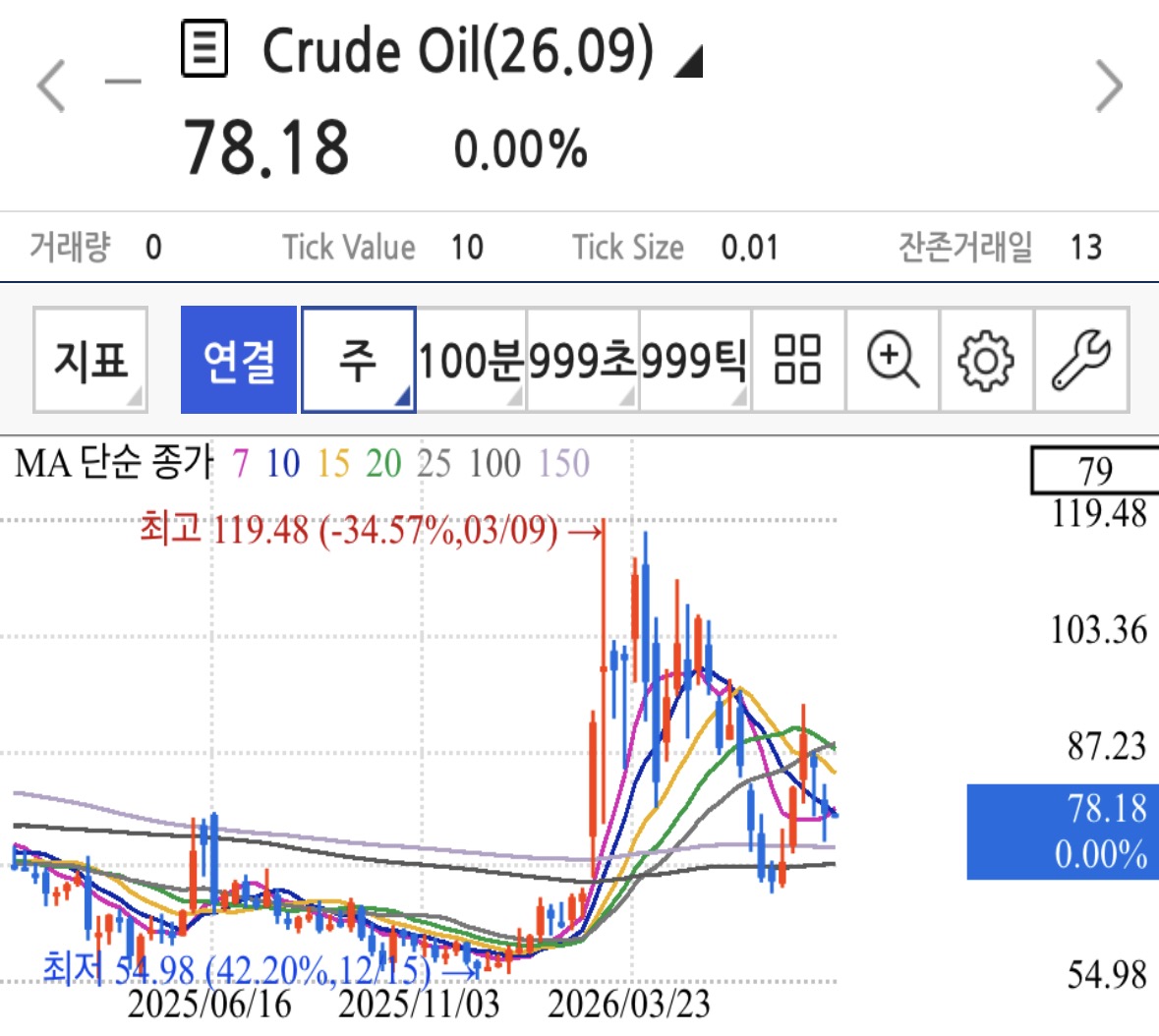
Zooming out, oil has largely traded sideways within a broad range between last year’s low (around $55) and high (around $119), without a clear directional trend, according to some analysts. Today’s Hormuz-driven jump can still be read as a move within that same range. Whether this marks a genuine trend shift will depend both on how the negotiations play out and on whether price can clear key moving-average resistance levels.

newsroom
Commodities